Mobile App Strategy
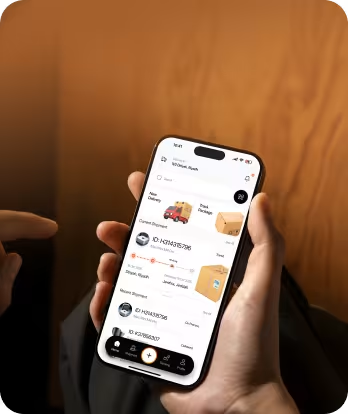
We clarify app requirements, focus on essential features, and optimize the MVP process.
Trusted by 105+ SaaS Founders and Product Teams




















 MVP App Strategy
We help SaaS startups turn early ideas into clear mobile app plans. From feature priorities to user flows, we develop a focused MVP that is faster to build, easier to launch, and ready for real user feedback.
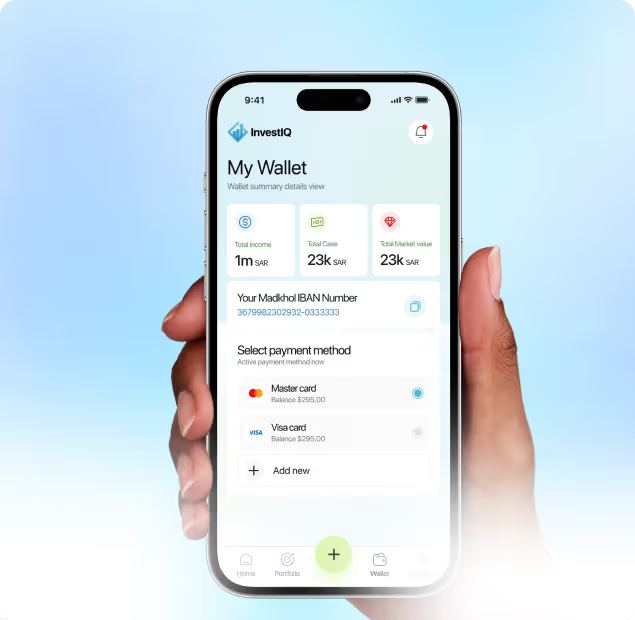
Diverse Studio helps SaaS startups design and build mobile apps with one clear process. We bring together product design, and development to launch your app faster.
 What We Offer
We help SaaS startups plan, design, build, and launch mobile apps for iPhone, Android, Flutter, and React Native.
We clarify app requirements, focus on essential features, and optimize the MVP process.
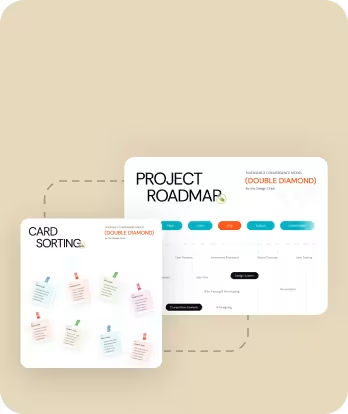
We design intuitive app interfaces that are easy to use and encourage repeat visits.
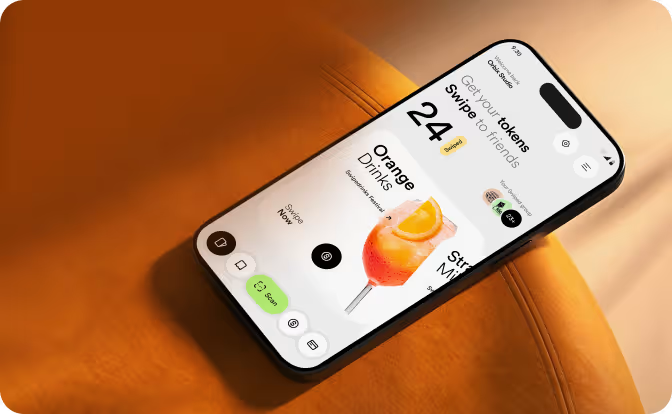
For iPhone users, small details matter. We build iOS apps that feel fast, polished, and native to Apple devices, so your product works the way users expect it to.
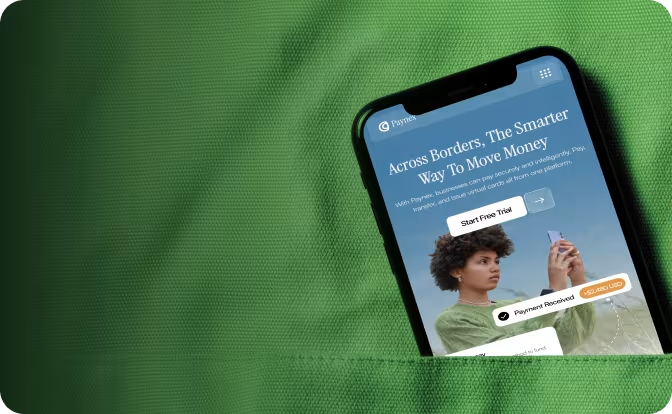
We build Android apps to be flexible and dependable across various devices and systems.
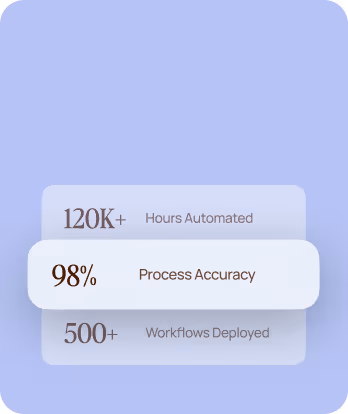
Use React Native to deploy on iPhone and Android efficiently, maintaining a consistent app-like experience.
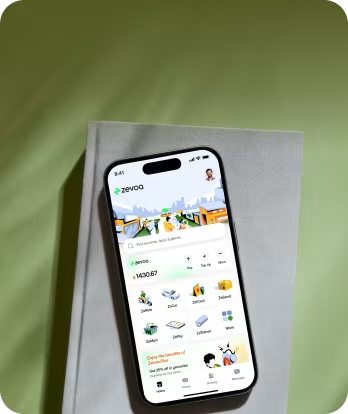
For quick, polished cross-platform apps, Flutter offers custom UI and consistent performance on iPhone and Android.
App Design Benefits
A clean, modern app experience helps users trust your product from the very first screen.

Clear flows and better screen design make the app simpler to use and easier to understand.

Better app design helps more users sign up, take action, and complete important steps.
A more polished product experience helps your app stand out in a crowded market.
Transforms app functionality into higher profitswthatoeut.cotere maadt3odt9%tw.on

Optimized designs enhance usability and satisfoction, seouring better visibility in app stores.
We compress delivery for SaaS teams by folding strategy, design and engineering into a single workflow built around reaching launch sooner.
We start with your idea and agree which handful of features have to land first.
We map the screens, journeys and product structure well before any code is written.
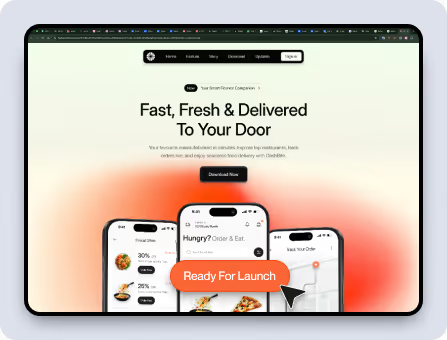
Designers and engineers pair up to turn the plan into a launch-ready product.
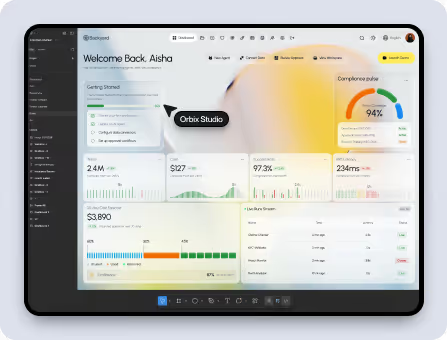 How Diverse Studio Uses Ai
We use AI to speed up research, improve product decisions, and move faster during design and development. Our process stays human-led, so your mobile app feels thoughtful, on-brand, and built around real user needs.
Use AI to explore ideas, user flows, and product direction much faster.

Prioritize features and shape clearer MVP scopes before development begins.

Speed up UX writing, wireframes, and screen exploration without losing quality.
Use AI-assisted workflows to reduce delays and improve delivery speed.
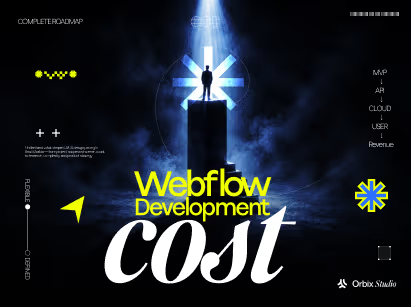
A look at what genuinely moves Webflow build costs, how studios price the work, and how to set a budget you can defend internally.
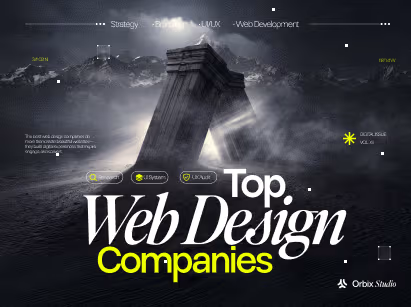
A practical way to compare studios on industry, platform and depth of craft, so the shortlist you take to your team actually holds up.
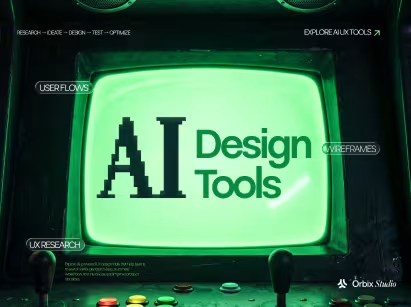
We tried the current crop of AI design tools on live client work. These are the ones that saved real hours rather than just looking clever.
If you're unsure where to start or want to see how we can help, reach out, and we'll walk you through it.

Let's talk through your goals, your timeline, and how Diverse Studio can support your team.
Yes. We design and build mobile apps for both iOS and Android. Depending on the product, we can create one shared app that works across both platforms or build separate native experiences when the product needs deeper access to device features.
We also design for the differences between iOS and Android, including navigation patterns, gestures, forms, permissions, and system behaviour.
The aim is not to make two identical copies of the same screen. Your app should feel familiar to users on each platform while still giving your company one consistent product experience.
We can support consumer apps, B2B tools, marketplaces, fintech products, booking platforms, internal apps, and SaaS companion apps. The project may include the customer-facing app, an admin dashboard, onboarding, notifications, payment flows, and other essential functionality.
Before development starts, we recommend the best approach based on your audience, product requirements, launch plan, and budget.
Yes. We can handle both the product design and the development of your mobile app.
This keeps the product journey connected from the start. The team defining the user flow is also thinking about how the app will be built, tested, and maintained. That reduces the common gap between a polished design file and an app that is difficult to implement.
The process usually includes product planning, user flows, wireframes, UI design, clickable prototypes, development, testing, and launch support. If needed, we can also create the backend, admin tools, and web dashboard that support the app.
You will review the work at key stages instead of receiving everything at the end. This gives you a chance to make decisions early, before changes become expensive.
If you already have developers, we can provide developer-ready designs and work with them through implementation. If you need a full team, we can take the app from idea to launch.
Yes. If your app needs a backend, we can design and build the systems that support it.
Most mobile apps need more than the screens users see. They may require user accounts, databases, authentication, payments, notifications, content management, admin controls, integrations, or data processing.
We plan these parts alongside the mobile experience so the product works as one connected system.
For an MVP, we keep the backend focused on what is necessary for launch and validation. There is no need to build every future capability before users have tested the core product.
We can work with tools and infrastructure that suit the product, including services such as Supabase, Firebase, PostgreSQL, AWS, Vercel, or custom backends where needed. If your team already has a preferred stack, we can work within it.
You will have visibility into the architecture and delivery plan, so you understand what is being built behind the app and why.
Yes. We can integrate the third-party services your app needs to work properly.
This may include payment providers, maps, messaging, booking systems, analytics, CRM tools, identity verification, AI models, calendar tools, push notifications, shipping platforms, or internal business systems. The right integrations depend on the product and the experience you want users to have.
We review each integration early because it can affect both the user flow and the development timeline. Some services are simple to connect, while others require more planning around permissions, data handling, security, or custom functionality.
Where possible, we use reliable tools that help you launch faster without creating unnecessary technical debt. If an integration is central to the product, we also consider what happens if that provider changes its pricing, limits, or service.
The goal is to make the technology feel invisible to the user. They should be able to complete the task without thinking about the systems working in the background.
Yes. We design and test mobile apps to work well across the device sizes and operating systems your users are most likely to use.
That includes different iPhone and Android screen sizes, responsive layouts, text scaling, touch targets, safe areas, and common system behaviours. We make sure important actions remain easy to find and complete whether someone is using a smaller phone, a larger phone, or a tablet where relevant.
A good mobile experience is not created by stretching the same screen across every device. Layouts need to adapt while preserving the product’s visual consistency and key user flows.
We also consider real-world conditions, such as slower connections, loading states, form errors, interruptions, and accessibility needs. These details make a significant difference to whether the app feels dependable.
Before launch, we test the most important flows across supported devices and versions. If your audience uses a particular device type or operating system, we can prioritise that in the testing plan.
Yes. We can guide your team through the launch process for both the Apple App Store and Google Play.
This includes preparing the app for submission, checking required store information, creating app-store screenshots and visual assets, reviewing the description, setting up privacy details, and helping ensure the app meets the relevant technical requirements.
App-store approval is not only about uploading the app. Apple and Google have different rules around permissions, payments, user data, account deletion, content, and functionality. We review these requirements before launch so there are fewer surprises at the final stage.
We also plan for testing, release timing, and possible review feedback. If either store requests a change, we can help your team understand what is needed and make the update.
After the app is approved, we can support future releases, store listing updates, new screenshots, and improvements based on early user feedback.
Yes. We can continue supporting your app after it goes live. The first release gives you real data and feedback, but it is rarely the final version of the product. Users may show you where the experience needs improvement, which features they value most, or what should be built next.
Post-launch support can include bug fixes, new features, interface improvements, operating-system updates, app-store updates, performance work, design-system expansion, and product roadmap support.
We can also help you respond to app-store reviews and customer feedback with practical improvements.
Some teams need ongoing design and development capacity every month. Others only need help for a planned release or a specific milestone. We can work either way.
The important part is that your app does not become difficult to maintain after launch. We build with future updates in mind and provide the files, documentation, and support needed to keep the product moving forward.
A focused mobile MVP typically takes around 8–12 weeks from planning to launch. A more complete app with onboarding, payments, several user roles, dashboards, and core business workflows usually takes 3–5 months.
Apps with real-time features, complex integrations, AI functionality, hardware connections, or separate native iOS and Android builds may take longer. App-store review time also needs to be included in the launch plan.
The fastest way to protect a timeline is to keep the first version focused. We help identify the core experience users need first and place lower-priority features on the roadmap for later releases.
Before work begins, we create a delivery plan that covers product definition, design, development, testing, app-store preparation, and launch. You will see progress in stages and have clear points to review the work.
If you have a fixed launch date, we can recommend a realistic scope that gives you the best chance of meeting it.
Yes. You own the source code, design files, and product assets created for your app.
The code is delivered through your own repository, while design files are shared in your Figma workspace or another agreed location. This means your team has access to the work and can continue developing the app with internal developers, another partner, or us.
We do not retain ownership of your product or lock you into ongoing work to access it. At the end of the project, you receive the files and documentation needed to understand what has been built.
We also recommend setting up key services under your own accounts where possible, including app-store accounts, hosting, databases, analytics, and third-party tools. That keeps control with your business from the beginning.
If the product uses paid services, APIs, or licences, we will make those costs and ownership requirements clear during planning. You should know exactly what you own and what depends on external providers.
A mobile app MVP typically costs between $40,000 and $120,000, depending on the scope, complexity, and technology required. A simpler cross-platform app with a focused user journey will sit closer to the lower end of that range.
Costs increase when the app includes custom backend work, payments, advanced dashboards, real-time features, complex integrations, AI capabilities, or separate native development for iOS and Android.
The design-only mobile app project usually costs less, depending on the number of screens, user flows, and whether you need a design system or responsive web experience alongside it.
We do not use one price for every app because the scope can vary significantly. Before development begins, we define the core features, project timeline, technical requirements, and total investment.
If you have a specific budget, we can help shape a first version that focuses on the features most important for launch and validation.
 10+ Projects Live
 5+ Projects Live
 Top Worldwide
 50+ Badges
 450+ Reviews
 47+ Reviews
 52+ Reviews
 5+ Projects Live