Launch Campaign Motion
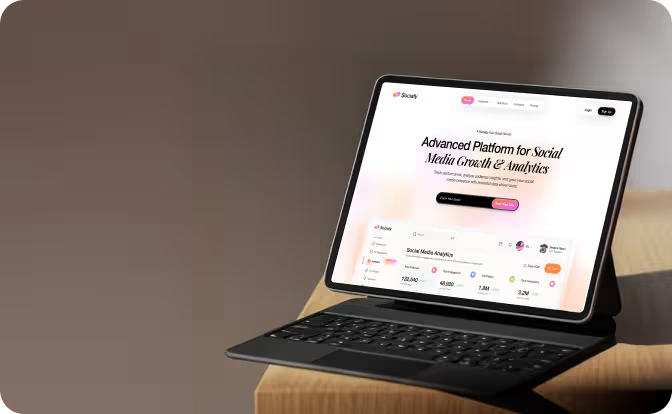
Support launches with motion assets designed to build attention, sharpen messaging, and create a stronger market presence.
Trusted by 105+ SaaS Founders and Product Teams


















 Custom motion design
Motion design helps brands communicate with more clarity, consistency, and impact across digital channels. Diverse Studio creates motion systems and visuals that make it easier to launch, explain, and scale with more presence.

Diverse Studio creates motion design for product brands that need clarity, polish, and speed. We combine creative direction, product thinking, and execution to deliver motion that feels premium and works across real marketing and product touchpoints.
 what we offer
From UI animation and 3D visuals to explainer content and launch assets, we support teams end-to-end or plug in where extra motion capacity is needed most.
Support launches with motion assets designed to build attention, sharpen messaging, and create a stronger market presence.
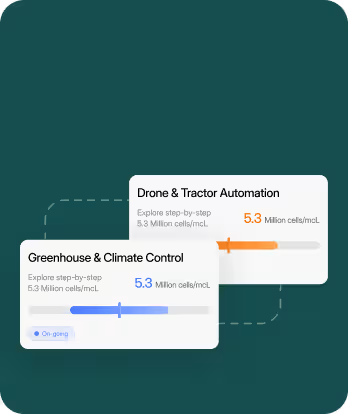
Use motion to clarify interfaces, highlight interactions, and polish digital products.
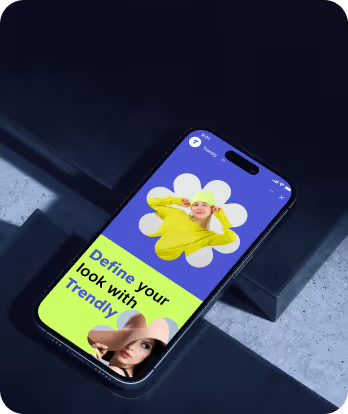
Turn complex ideas into clear visual narratives that help audiences quickly understand products, features, and value.
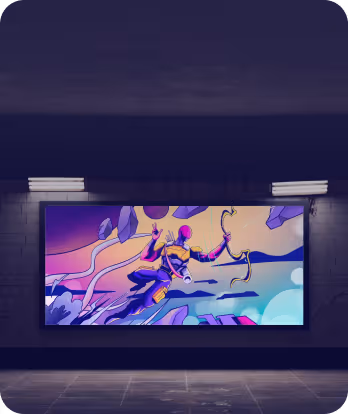
Create sophisticated brand stories through 3D motion design.
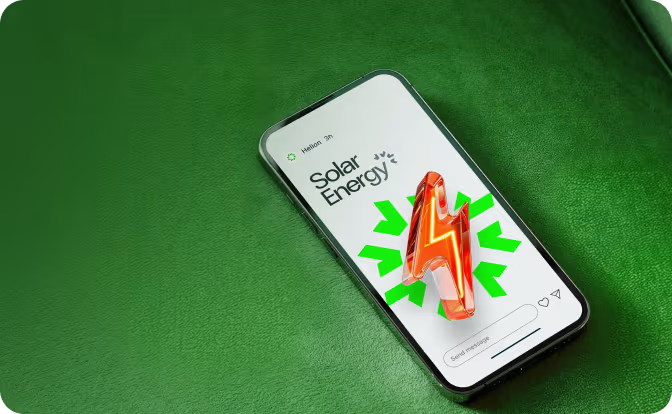
Present your product’s operations using motion-centric demos that streamline workflows, accentuate features, and highlight user advantages.
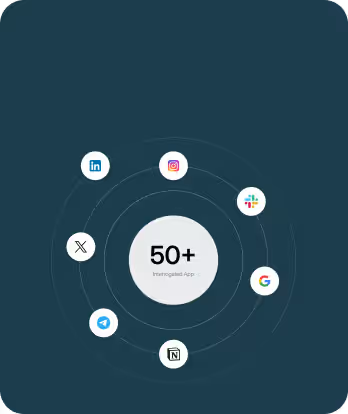
Build a motion language your brand can use consistently across campaigns, product experiences, and digital touchpoints.
We compress delivery for SaaS teams by folding strategy, design and engineering into a single workflow built around reaching launch sooner.
We start with your idea and agree which handful of features have to land first.
We map the screens, journeys and product structure well before any code is written.
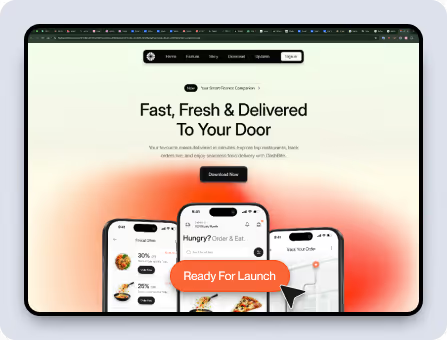
Designers and engineers pair up to turn the plan into a launch-ready product.
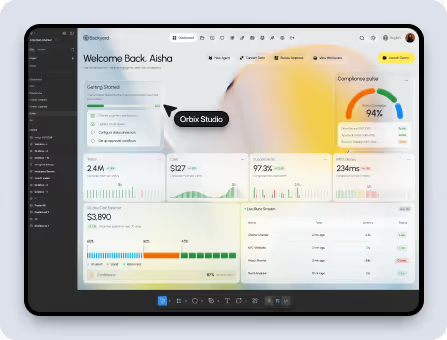 How Diverse Studio Uses AI
We use AI to speed up motion workflows, explore more creative directions, and produce content more efficiently, while keeping every output aligned with your brand, product, and campaign goals.
Use AI-assisted exploration to test visual directions and shape motion ideas earlier.
Speed up repetitive tasks, extend assets, and support faster motion production.
Adapt motion assets across formats, channels, and campaign needs with less friction.
Apply AI within a guided creative system so motion stays consistent and on-brand.
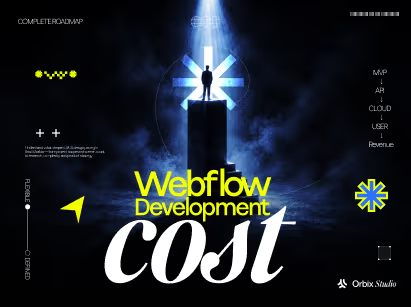
A look at what genuinely moves Webflow build costs, how studios price the work, and how to set a budget you can defend internally.
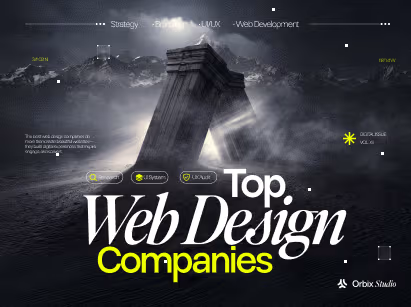
A practical way to compare studios on industry, platform and depth of craft, so the shortlist you take to your team actually holds up.
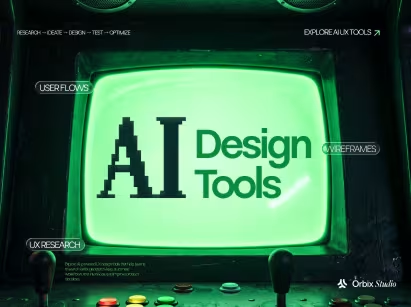
We tried the current crop of AI design tools on live client work. These are the ones that saved real hours rather than just looking clever.
If you're unsure where to start or want to see how we can help, reach out, and we'll walk you through it.
Let's talk through your goals, your timeline, and how Diverse Studio can support your team.
A motion project can be as small as one animated product screen or as large as a full explainer video. It depends on what you need people to understand or do.
Most projects include a clear plan, storyboard or rough direction, visual design, animation, review rounds, and final files ready to use. If we are creating a product demo, we may also help with the message, screen flow, and voice-over direction.
For website or app motion, this can include animated UI screens, loading states, empty states, icons, buttons, charts, and small moments that make the product feel easier to use.
For marketing, it may include ads, social videos, launch videos, or animated website sections.
Before we begin, we agree on the goal, style, number of scenes, formats, and final files. That way, you know exactly what you are getting and why each piece of motion is being made.
Yes. You do not need to redesign everything before adding motion. If you already have Figma screens, website designs, brand assets, illustrations, or a product interface, we can use them as the starting point. We first look at what you have and decide where movement will help most.
For example, motion can show how a feature works, make a chart easier to read, guide someone through a form, or bring a static social post to life. Sometimes a small animation is enough.
Other times, we can turn your existing screens into a full product demo or explainer video.
We keep the visual style close to your current brand, so the motion feels like a natural part of your product - not something added later by a different team.If your current designs need small changes before animation, we will point that out clearly. We can make those updates as part of the project.
Yes. We can animate website, dashboard, and mobile app screens to show how your product works.
This is useful when a static screenshot cannot explain the full experience. A short animation can show what happens when someone clicks a button, completes a task, receives a result, or moves through an important flow.
We can animate onboarding steps, dashboard changes, charts, menus, forms, notifications, loading states, empty states, and success messages. These can be used inside the product, on your website, in sales decks, or in marketing videos.
Good UI motion should make things clearer. It should not feel like a cartoon or slow people down. We use movement to guide attention, show change, and make the interface feel more responsive.
If you are building a new product, we can plan the motion during the design stage. If the app already exists, we can add motion to the parts that need more clarity or personality.
Yes. The motion should look and feel like your brand from the first second. We begin by reviewing your logo, colours, fonts, illustrations, product screens, website, and any existing brand guidelines. This helps us understand your style before we create anything new.
A serious fintech brand may need calm, simple movement. A playful consumer app may need more energy and personality. The animation style should fit the people you want to reach and the feeling you want them to have.
We also look at the small details: the speed of movement, type of transitions, use of colour, sound, and how much motion is appropriate. These choices make a big difference.
If your brand is still new or inconsistent, we can help create a motion style that gives future videos and product animations a clear direction. The result is work that feels like part of your brand, not a random template.
Yes. We create motion with real development in mind. For website and app animations, we choose formats that developers can actually use.
This may include Lottie files, JSON files, SVG animations, video files, or clear motion notes inside Figma. We also explain where the animation belongs, what starts it, how long it lasts, and what should happen when the user interacts with it.
Lottie is often a good choice for app and web motion because the files are small, sharp on different screen sizes, and easy for developers to add to a product. It works well for things like loading states, empty states, icon movement, onboarding illustrations, and success moments.
If an animation is too complex for a simple handoff, we work with your developers to make sure it is practical.
The aim is simple: create motion that looks good and can be built without causing headaches.
Yes, when it helps people understand something faster or makes the next step clearer.
For example, a short product demo on a website can show what your product does before someone has to read a long block of text. An onboarding animation can help new users understand where to start. A small success animation can make a completed task feel clear and rewarding.
Motion can also make a product feel more alive. But it should always have a job. If it distracts users, makes a page slow, or hides important information, it can hurt more than help.
We use motion to explain, guide, and support the user journey. That might mean showing a key feature, drawing attention to an important action, or making a complicated process easier to follow.
The best motion is often simple. Users may not even notice it as “animation” - they just feel that the product is easier to use.
You will receive the final files in the formats you need to use them. For website and app motion, that may include Lottie or JSON files, SVG files, GIFs, MP4 videos, or WebM files.
For social media, ads, and marketing videos, we can provide the right sizes for each platform. If you need the editable project files, we can also include the source files from tools such as After Effects or Figma.
We organise the files clearly, so your team and developers know what each file is for. Where needed, we include notes about how an animation should be used, triggered, or placed in the product.
You own the final work created for your project. Your team can use it on your website, app, campaigns, sales materials, or future updates.
If you need new versions later - such as a different size, language, or campaign message - we can update the existing motion instead of starting from scratch.
A typical 60–90 second motion video takes around 3–5 weeks. That time usually includes planning, storyboarding, design, animation, feedback, and final delivery. Shorter pieces, such as a social ad, product loop, or simple UI animation, can often be completed much faster.
The timeline depends on how much needs to be created. If you already have final screens, illustrations, copy, and brand assets, we can move quickly. If we need to create the script, visuals, product story, or several animated scenes, the project will take longer.
We share work in stages, so you can review the direction before a lot of animation is completed. This helps avoid wasting time on the wrong idea.
If you have a launch date, campaign, or event coming up, tell us early. We can help shape the scope around the time you have available.
Yes. Many teams need motion more than once. After the first project, you may need new ads, product updates, social videos, launch assets, website animations, or motion for new features. Working with the same team makes that easier because we already understand your brand, product, and motion style.
Ongoing support can work well for SaaS and AI companies that regularly launch features, run campaigns, or need fresh content for sales and marketing. Instead of finding a new freelancer or agency each time, you have a team that can build on what already exists.
We can create a simple motion system for your brand, then use it across different projects. This keeps videos and animations looking connected, even when they are made months apart.
You can work with us on a monthly plan for regular output or come back for specific projects when you need them. Both options are available.
A 60–90 second explainer or product video usually costs between $3,000 and $10,000. Shorter motion pieces, such as animated ads, social posts, or product loops, often cost between $500 and $2,000 each.
The final price depends on the length, number of scenes, amount of custom illustration, type of animation, voice-over needs, and how many versions you need.
A simple animation using existing product screens is usually faster and costs less than a fully custom video with a script, illustrations, and several animated scenes.
For teams with regular motion needs, monthly support starts at $2,999 per month. This can be useful if you need a mix of product demos, ads, website motion, and social content throughout the month.
Before work begins, we will give you a clear scope, timeline, and price, so you know what to expect.
 10+ Projects Live
 5+ Projects Live
 Top Worldwide
 50+ Badges
 450+ Reviews
 47+ Reviews
 52+ Reviews
 5+ Projects Live